Advancing global research on climate impacts, vulnerability, and adaptive responses.
The Climate Change: Impacts & Responses Research Network brings together scientists, policymakers, educators, and community leaders to explore the causes and consequences of a rapidly changing climate. Member-based and scholar-led, the Network fosters rigorous, cross-disciplinary dialogue on adaptation, mitigation, and resilience.
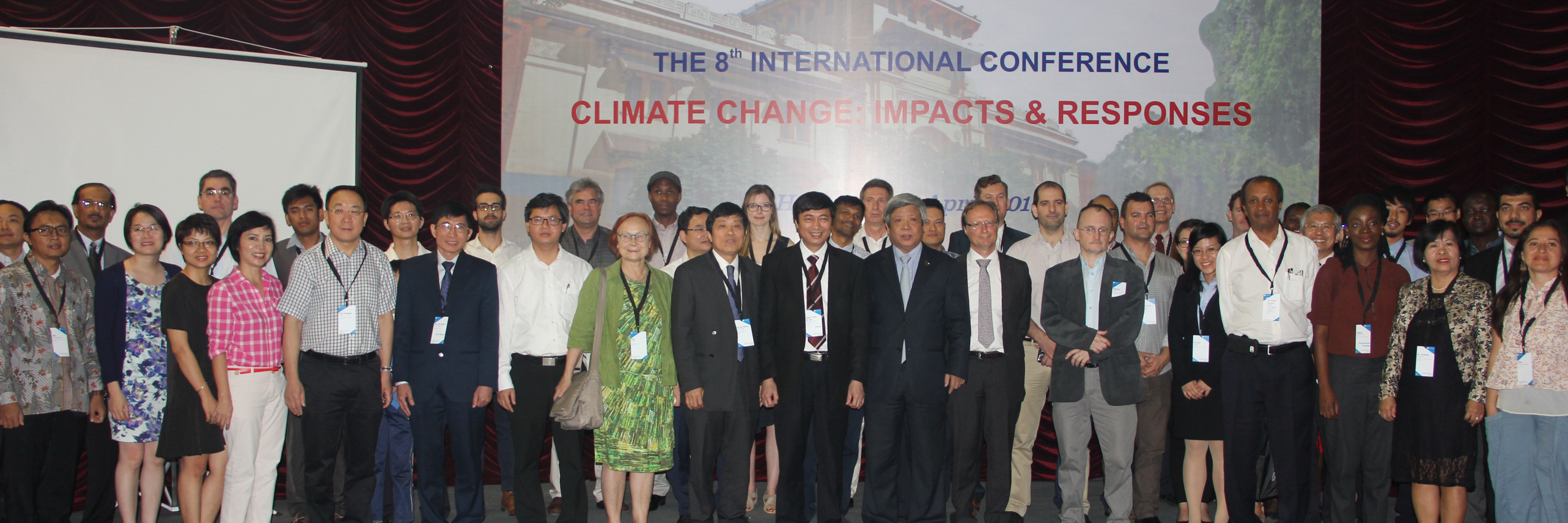
Eighth International Conference on Climate Change: Impacts & Responses, NU University of Science (HUS), Vietnam National University (VNU), Hanoi, Vietnam (2016)
Our Platforms
Our Platforms
Founded in 2009, the Climate Change: Impacts & Responses Research Network was created to link scientific evidence, social responsibility, and policy action in addressing one of the most urgent challenges of our time. From the outset, it has examined how climate systems interact with human institutions and behaviors—bringing together researchers who study ecosystem change, human vulnerability, governance, and pathways for mitigation and adaptation. The Network has evolved into an international forum for evidence-based inquiry and interdisciplinary exchange, supporting work that spans paleoclimatology, global environmental change, socio-ecological impacts, and the ethics and politics of climate response.
Annual Conference
The International Conference on Climate Change: Impacts & Responses is hosted each year with leading universities and research institutes. The inaugural meeting in Pune (India) established the Network’s focus on both scientific evidence and social dimensions of climate disruption. Subsequent hosts have included the University of Queensland (Australia), the University of Washington (USA), the University of Iceland (Reykjavík), Vietnam National University – HUS (Hanoi), Anglia Ruskin University (Cambridge, UK), the University of California, Berkeley (USA), The Catholic University of America (Washington, D.C.) and Ca’ Foscari University of Venice (Italy). Recent partners include Éklore–Ed School of Management (France) and Florida International University (USA).
Journal
The International Journal of Climate Change: Impacts and Responses provides an interdisciplinary forum for examining scientific evidence of climate change and its uneven ecological and social consequences. Articles address impacts on ecosystems—from glacial and riverine systems to coral reefs—alongside studies of marginalized communities facing shifting shorelines, food and water insecurity, and climate-related health risks. The journal engages questions of scale (local, national, global) and integrates science, economics, politics, sociology, and ethics in exploring adaptive responses and resilient futures. All submissions undergo double-anonymous, rubric-guided peer review with constructive editorial feedback and are published via a hybrid open access model.
Book Imprint
The Climate Change: Impacts and Responses Book Imprint publishes monographs and edited collections that extend research on sustainability, adaptation, mitigation, and governance. The imprint supports broad and specialized topics—from climate ethics and environmental policy to systems modeling, resilience strategies, and community-based adaptation. Books may be published open access, and the acquisitions philosophy welcomes diverse authorship and interdisciplinary approaches aimed at advancing scholarly and policy-relevant knowledge.
Online Member Knowledge Community
The Climate Change: Impacts & Responses Research Network’s Member Knowledge Community on CGScholar provides a year-round environment for sharing profiles, research papers, field studies, and works-in-progress. Designed for collaborative knowledge-building, it offers a multimodal authoring space with light, community-guided review to strengthen clarity, purpose, and reader context. Conference presentations, journal submissions, and book projects connect within this integrated research ecosystem—supporting sustained engagement across climate science, governance, adaptation, mitigation, resilience, and community response.
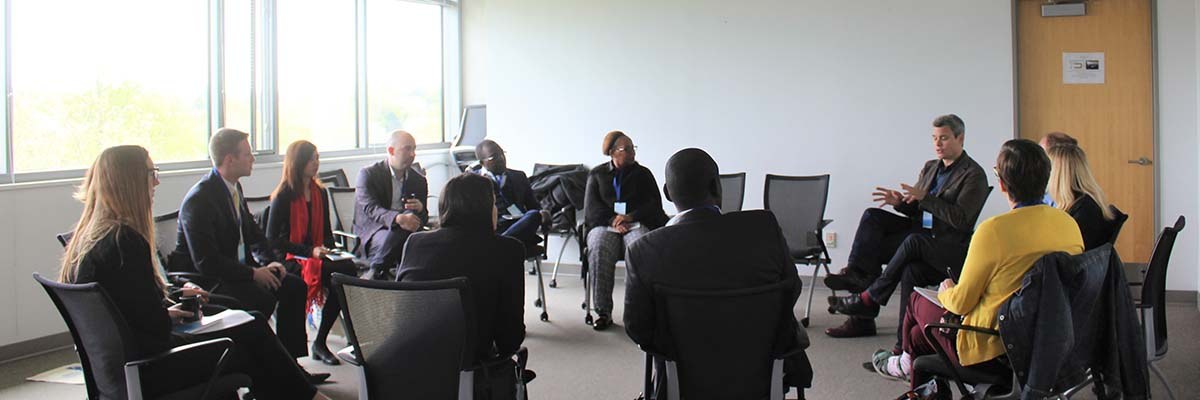
Ninth International Conference on Climate Change: Impacts & Responses, Anglia Ruskin University, Cambridge, UK (2017)
Leadership
The Network is chaired by Dr. Victoria Hurth, Fellow at the University of Cambridge Institute for Sustainability Leadership (UK). Her work bridges climate science, organizational strategy, and social ethics—reflecting the interdisciplinary spirit of the Network.
Victoria Hurth
Senior Associate, Institute for Sustainability Leadership, University of Cambridge, United Kingdom
Partnerships extend the Network’s member-based, scholar-led mission—linking universities, research institutes, and community organizations that share our commitment to advancing knowledge on aging and social transformation. Through these collaborations, we strengthen the reach and relevance of our annual conference, connect local initiatives to global conversations, and foster comparative research across regions and disciplines. We are grateful to work alongside the following institutions and partners.
International Institute for the Inclusive Museum (iiiM)
Hyderabad, India & Sydney, Australia
The Catholic University of America
Washington, D.C., USA
Ca' Foscari University of Venice
Venice, Italy
Éklore-Ed School Of Management
Pau, France
Florida International University
Miami, USA
University of the Aegean
Rhodes, Greece
University of the Witwatersrand
Johannesburg, South Africa
School of Architecture, University of Hawai'i at Mānoa